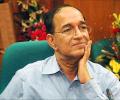
'The diversity of geography and demography of India is truly reflected in the challenges faced during the election process.' 'International observers have never been encouraged in India. The internal system of monitoring by neutral and senior government officers has become time tested and proving to be very useful during elections.' We, at the Commission, have to continuously strive to do things right and make sure that we conduct elections which are credible and transparent,' India's Chief Election Commissioner V S Sampath tells Radhika Rajamani/Rediff.com in an exclusive interview.

'Happily,' says Ambassador B S Prakash, 'BRICS displayed new-found energy and built something real, a bank. Between needless nihilism and as yet unjustified euphoria, there are many stations for the BRICS train and we can watch its progress with renewed interest.'

New Delhi remains a priggish suitor to Washington's overtures, but it has begun appreciating potential tech benefits to ties with the US.
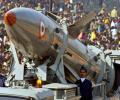
It is time the new government, unencumbered with the burden of past, initiates a wide ranging review and open debate on the security issues to rectify our short term and long term shortcomings. It has taken some wise steps but has to go beyond this to identify the structural weakness and create systems, says Colonel (retd) Anil Athale.

'The US wants Modi to succeed because we want India to succeed. For our part, when India thinks of its partners in the world, we want it to think of the US first. That means positioning our country as the preferred provider of the key inputs that can help to propel India's rise.' 'The meeting between Modi and Obama is, and must be, an opportunity for true strategic dialogue -- not a scripted exchange of talking points, but an open discussion of the big questions. What kind of world do we want to live in? What are our true priorities? And most importantly, why does this partnership still matter?'

Irom Sharmila's decision to end her 16-year-old fast against the AFSPA continues to be hotly debated and contested in Imphal.

'A collapsing Pakistan may well unleash its nuclear weapons as the last throw of the dice. With a nuclear arsenal of over 50 bombs, even a regional nuclear exchange can devastate the world.'
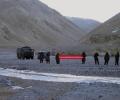
'Demchock and Chumar are important crucibles for both China and India to know about the other. While India 'learns,' she also need to 'teach,' suggests Lieutenant General Anil Chait, one of the Indian Army's most cerebral thinkers, who recently retired as chief of the Integrated Defence Staff.

'What gives hope is that Modi's own leadership is vitally linked to his capacity to deliver on the economic front. Indeed, if he succeeds, India's foreign policies will have changed beyond recognition,' feels Ambassador M K Bhadrakumar.

'Let me talk about young Indian startups with their hearts in the right place and how they are proving that innovations that represent 'affordable excellence' -- breaking the myth that 'affordability' and 'excellence' cannot go together -- is indeed possible!' says Dr R A Mashelkar, the eminent scientist, in this fascinating feature.
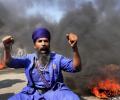
It is as much about farmer woes and the lack of job opportunities as about the mixing of religion and politics.

Iconic rights activist Irom Sharmila on the highs and lows of her long fast, why she gave it up and her plans.

Indian policymakers must incorporate in their nuclear doctrine a realistic response to tactical nuclear warheads, says Ajai Shukla.
How has the Indian State, in principle and practice, given shape to the essential ingredients of the secular principle and composite culture?
Retired senior US diplomats Teresita and Howard Schaffer believe the 'US cannot afford to continue restricting its contacts with Narendra Modi.' Rediff.com's Aziz Haniffa reports from Washington, DC.

'J&K continues to have the highest concentration of military personnel anywhere in the world and the alienation of the Kashmiri has increased in the last ten years than ever before.'
'To re-establish the writ of the State and resume governance, frayed tempers in the streets and in the media need to be calmed.'

The number of people killed in acts of terror reached a record high last year, with almost four in five of these deaths occurring in just five countries, new research shows.

Any attempt to defang Islamic State must first cut off its main sources of funding, especially its revenue from oil sales, extortion and crime, ransom payments, and support from foreign donors. This will also be need to be backed up by efficient forces on the ground.

Unlike Al Qaeda, ISIS recruiters are proactive and internet savvy. They know there is angst among Muslims about their helplessness even in a vibrant democracy like India, leave alone other parts of the world where Muslims live. So ISIS feeds them a regular diet of the golden age of the Ummah, creating for these youngsters a live yet make-believe world which is completely disconnected from the reality around them, says Syed Firdaus Ashraf.
China wants a code of conduct for troops on the India-China border areas. While the Indian side has reacted cautiously, it is not clear what effective additional protocols that the current proposed code will bring forth to usher stability in the border areas, says Srikanth Kondapalli.
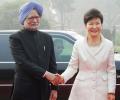
South Korean President Park Geun-hye's visit to India will enhance economic and military ties between the two countries and give the relationship a strategic dimension, says Jiye Kim.

The world must hang its head in shame for being a mute spectator to the 'cultural holocaust' in Tibet, says Major General Mrinal Suman (retd).

It is a dark legacy bequeathed by Nehru to India. In its DNA lies the subconscious fount of India's schizophrenic geopolitics that forsook in one sweep all its historically-entrenched strategic interests in Tibet in favour of China, says R N Ravi, on the 60th anniversary of the Panchsheel Agreement.

There are some larger policy issues related to the submarine as a platform and the modernisation programme of the navy that merit brief recall and review, says C Uday Bhaskar


'Our approach to India is no different from the approach that we have made in India over the years, recognising its non-aligned status. That's their decision; we're not trying to change that. We have common interests, and we have actually built on those common interests... We think there's more potential to build on those common interests.' 'Security, stability, freedom of sea lanes, economic development, energy, all those are certainly in the interest of India and the region, as they are to the United States.' The transcript of US Secretary of Defence Chuck Hagel's interaction with reporters travelling with him hours before he landed in New Delhi on Friday on a three-day visit to India.

While Iraq and Afghanistan top the Global Terrorism Index 2014 as the most terror-affected nations, India has been ranked number six.

'Pakistan is full of 'religious entrepreneurs' like Hafeez Saeed who poison the minds of the young so that they can be motivated to become terrorists. They work in concert with the rulers of Pakistan. It is a private-public partnership.'

The year 2014 is coming to an end. It was the year of conflict, the year of strife. Year 2014 will be remembered for several reasons -- the rise and threat of the Islamic State, the downing of two Malayasia Airlines aircraft and the sudden and effective way of using hastags on social media to generate a buzz about the event. After all, who can forget #theicebucket challenge and the phenomenon it grew into. Read on as we bring you an overview of international news and events of 2014.
'The horrific episode of January 18 in Muzaffarpur, Bihar, is quite different from what happened in Muzaffarnagar, UP, in September 2013. The Akhilesh Yadav-led administration in UP and riot-mongers among our political formations need to learn lessons from the response of the state and society in Bihar's Muzaffarpur,' says Mohammad Sajjad.
The current trans-LoC operations is a trailer projected to the Deep State that India can throw caution to the winds and calibrate its response.

'Why should the people of Odisha divert water from the Mahanadhi when 13 out of 32 districts are chronically drought prone?' 'Water is a state subject. Can you really nationalise rivers for which you need drastic amendments in the Constitution?'

Each 'adarsh village' should have piped drinking water, connectivity to the main road, electricity supply to all households, library, telecom and broadband connectivity including CCTVs in public areas. Emphasis will also be on e-governance, says Sheela Bhatt/Rediff.com.

An array of Olympians and stars of sports niche and new arrive in the South Korean city of Incheon for the 17th Asian Games this month, bringing together some 10,000 athletes for a 16-day multi-sport spectacular second only in scale to the Summer Olympics.

'When he first came to office, my belief is that the PM's reading of the landscape was that, with a vanquished Congress and fragmented Opposition, he was looking at least at two terms in office. This reading perhaps allows for a more cautious, gradual approach.' 'It was only a matter of time before the government was forced to come face-to-face with a serious corruption scandal. This is not a commentary on the BJP, but a statement about India's political economy.' 'There is growing concern about the government's commitment to freedom of expression, religious tolerance, and an independent civil society. Thus far, the positive movement on strategic and economic matters has crowded out these concerns, but they are lingering beneath the surface.'
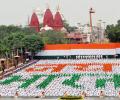
A review of key pronouncements he made in his first Independence Day Speech on August 15, 2014.
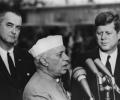
As Prime Minister Narendra Modi begins his historic visit of the United States of America, here's a look at some landmark visits by Indian prime ministers to the United States of America.
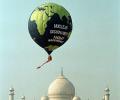
Muzzling NGOs is unbecoming of a democracy. Self-confident democracies encourage, indeed applaud, the involvement of citizens' associations, including NGOs, in social and political decision-making and development planning. Instead, our paranoid government bullies and terrorises them, says Praful Bidwai.

'In each hartal, enormous amount of public money is wasted. The entire state comes to a standstill. How long can this go on?' 'Every year 3 crore people sit at home not because they support hartals, but because they are forced to do so.' 'This is part of a larger measure to curb democratic rights.'
 © 2026 Rediff.com - Advertise with us - Disclaimer - Privacy Policy - Sitemap - Feedback - About us - Terms of use - Grievances